Case Study: Game Design
Journey through the Dark
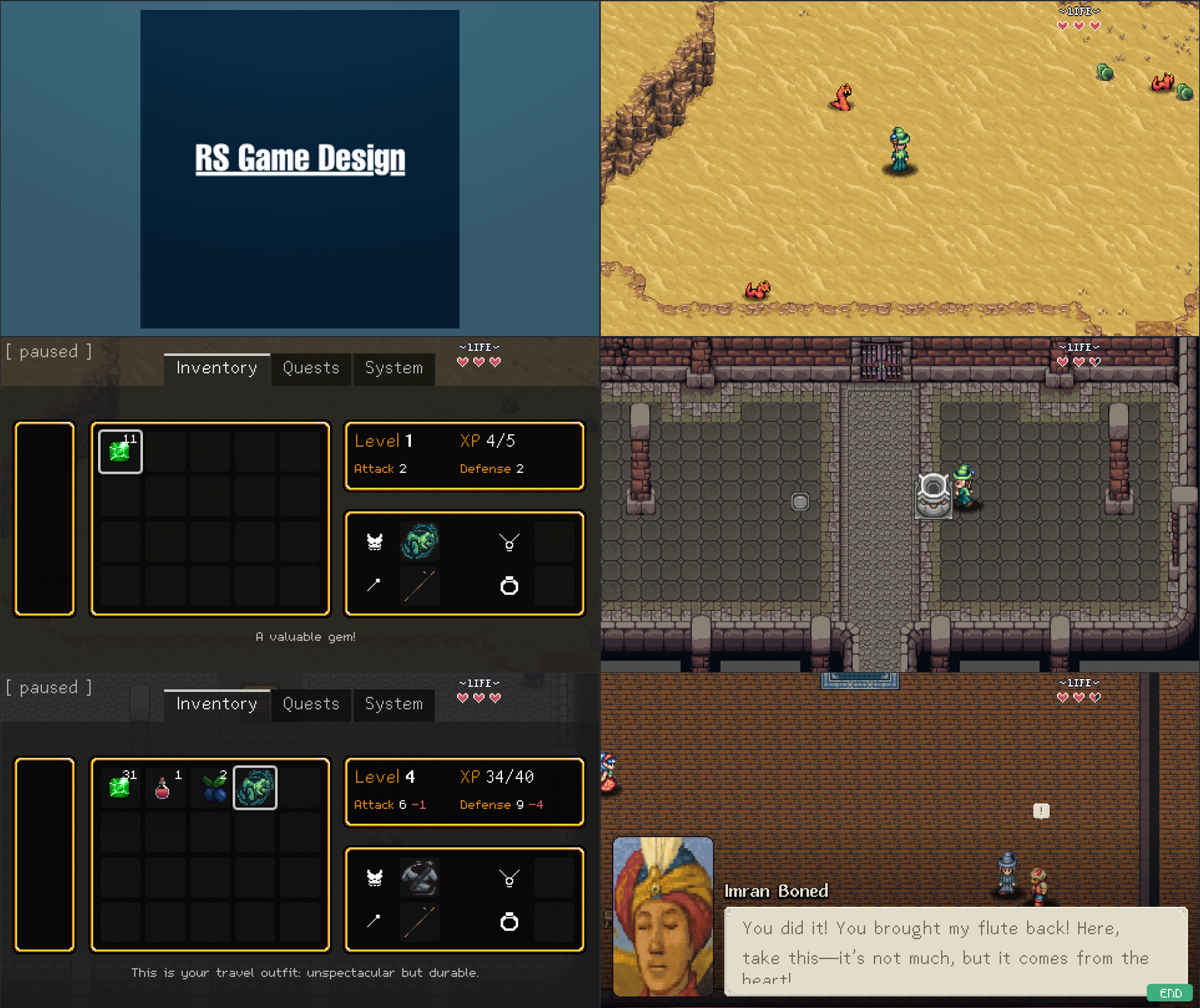
2D Top Down Action / Adventure RPG | Proof-of-Concept | Godot 4.4
Project Overview
Role:
Timeline:
Delieverables:
Game Designer
Developed over 6 Months half-time
Playable Demo
The Challenge
Create a fully functional demo for an action-RPG from scratch as an academic semester project – with zero prior experience in Godot or GDScript. Coming from a Unity/C# background, I had to not only learn a new engine and language, but also translate theoretical game design knowledge into a playable, documented game within six months of part-time work.
The project was intended to familiarize us students with the complete process of video game creation and to explain it in detail - from high concept and concept art through GDD writing and implementation. It was also meant to make students aware that, sooner or later, every game designer will come into contact with code. Thus, this semester project also served to take away the ‘fear of programming.
The Solution
To bring the concept to life, I first familiarized myself with the fundamentals of Godot 4.4 and GDScript by working through a series of tutorials by HeartBeast and documentation. This learning phase laid the technical foundation for building a functional prototype and allowed me to understand the engine’s capabilities in relation to my design goals.
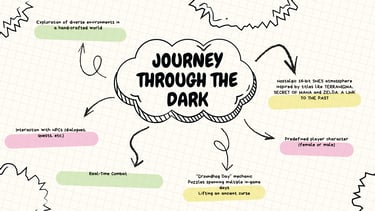
With the technical basics in place, I began shaping the game’s core experience: a nostalgic 2D top-down action adventure inspired by SNES classics. I focused on environmental storytelling, real-time combat mechanics, and a time-loop puzzle structure that unfolds over multiple in-game days.
My Approach
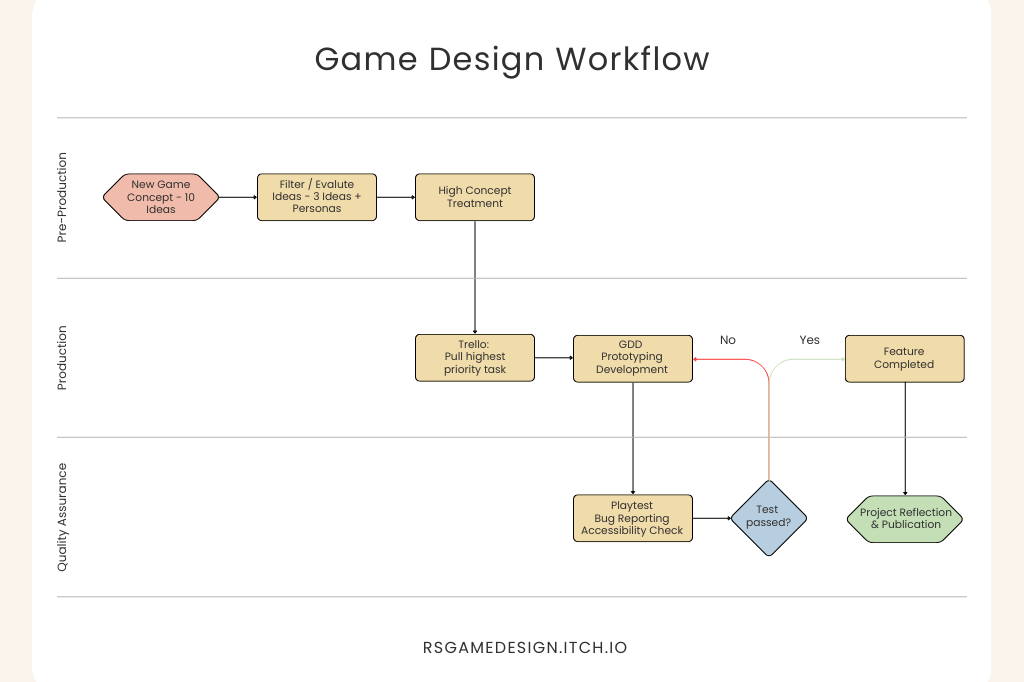
Structured Academic Workflow
Rather than diving straight into development, I followed a rigorous academic framework with 17 design exercises, ensuring every decision was documented and justified.
Phase 1: Pre-Production (Week 1 - 4)
Foundation: Design before code.
Concept Brainstorming (Q1-Q4)
I started with broad ideation, generating 10 game concepts across different genres and themes. Each concept received a brief description and was evaluated against criteria like scope, technical feasibility, and personal interest.
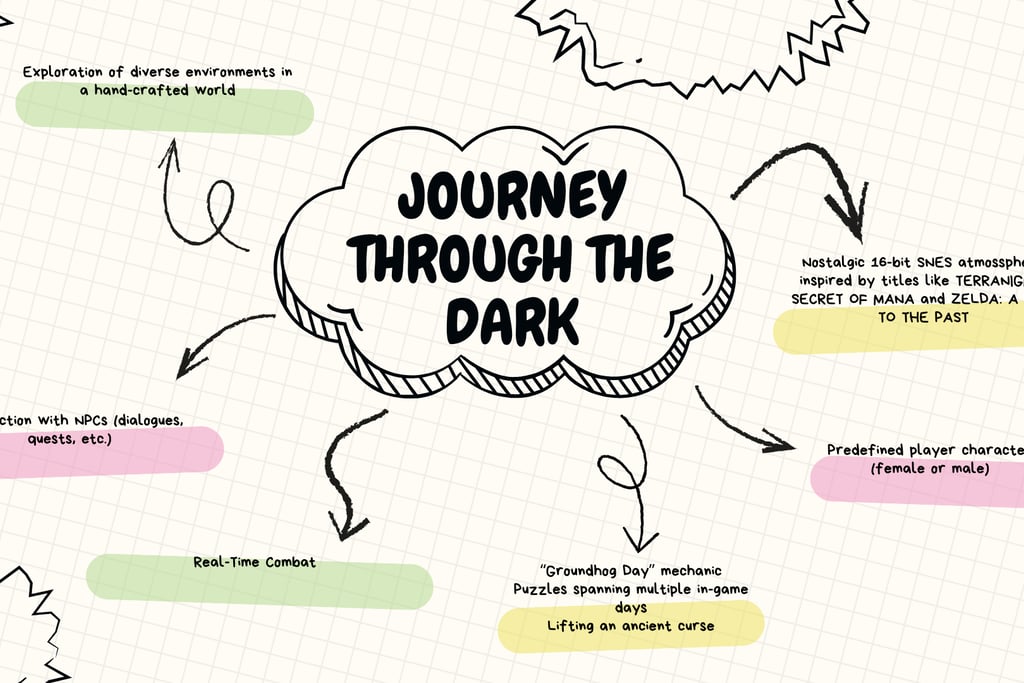
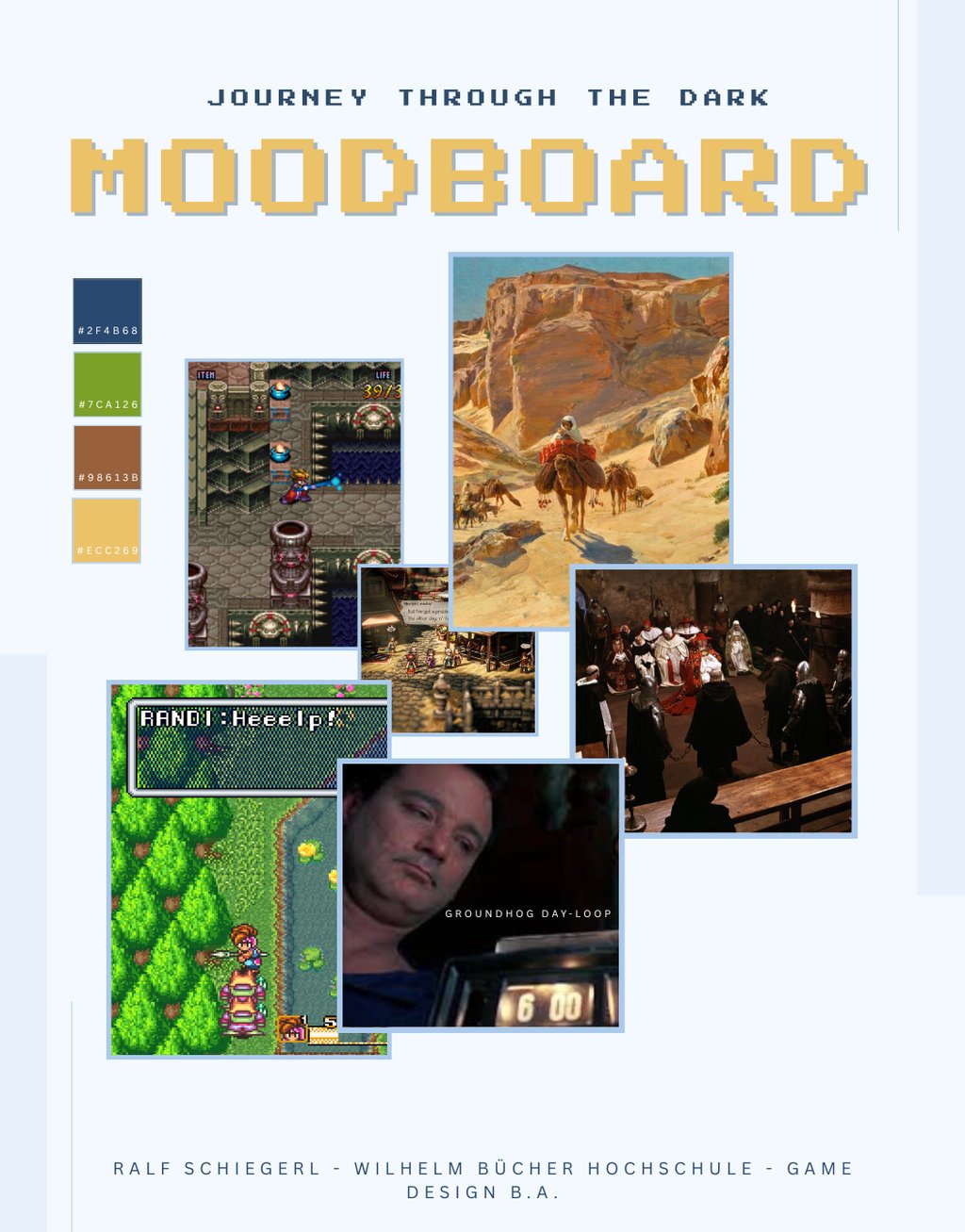
Game inspirations (Terranigma, Secret of Mana, Octopath Traveler II)
Thematic references (Desert pilgrimage)
Narrative influence (Groundhog Day, The Name Of The Rose)
Phase 2: Production (Week 4 - 20)
From paper to playable: Learning, building, iterating
Ideas: All planned features
In Progress: Active development
Testing: Features ready for playtesting
Done: Completed and documented
Every 10 days, I wrote progress reports comparing planned vs. actual work, identifiying blockers, and adjusting scope when necessary.
This disciplined approach saved the project. By Month 4, I realized I was behind schedule and proactivly cut planned content to focus on polishing core mechanics.
Prototyping (Q14-Q15)
Before building in Godot, I tested core mechanics with prototypes:
Paper Prototype:
Rough sketches of user interface elements, levels, player, and enemies on paper to simulate the overall feel of the game.Digital Paper Prototype:
The sketches were transformed into basic shapes using Affinity Designer, with added frame animations to simulate player movement and overall game feel.
Foundation:
I followed Heartbeast's Godot 4 Action RPG tutorial series to understand:GDScript fundamentals
Signal system
Node-based architecture
Adaptation:
I reinterpreted tutorials to fit the needs of my project:Tutorial's 3-state enemy → My 5+ modular states with different transitions
Tutorial's array inventory → My resource-based slot system with equipment
Tutorial's dialog system → My visual node-tree with designer-friendly editing
Tutorial's Save/Load system → My JSON-based save manager
Original Systems:
I built custom mechanics inspired by, but extending beyond, the tutorials:
Quest system with branching dialog and conditonal NPC responses
Dungeon puzzle mechanics (preasure plates, pushable statues, locked doors)
Level-up progression with XP curves and stat growth
Boss fight with 3 attack patterns and telegraphed mechanics
Phase 3: Quality Assurance & Documentation (Week 20 - 24)
Testing, fixing, reflecting.
I conducted playtesting with 3 participants, documenting:
Bug reports
Error classification (Critical, Major, Minor, Polish)
Player feedback
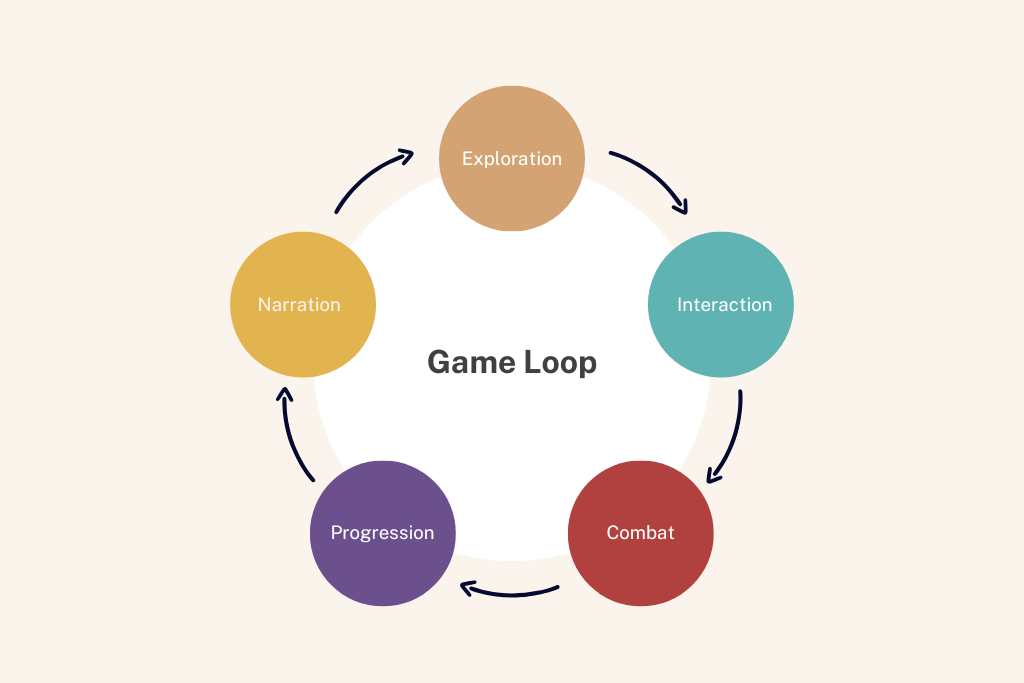
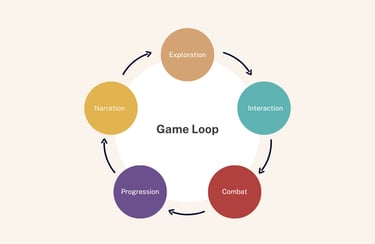
Before diving into implementation, I defined the core gameplay loop that would drive player engagement:
The 5 pillars:
Exploration - Discover new areas, uncover secrets
Interaction - Engage with NPCs, accept quests, trigger events
Combat - Face enemies in a real-time combat
Progression - Gain XP, Gold, level up, acquire equipment
Narration - Receive story reveals, unlock new objectives
While the gameplay draws inspiration from SNES classics like Terranigma, Secret of Mana, and Zelda: A Link to the Past, the narrative structure and adventure design stem from my pen-and-paper background.
Challenges
Solutions
No Godot Experience
Coding in General
JSON Save Structure
Tutorial ≠ Reality
Scope Creep vs. Actual Implementation
Structured learning via tutorials
Broke down functionality
Implemented validation functions
Extended tutorials with original mechanics
Cut content, focused on polish
The winning concept:
A 2D top-down action/adventure RPG featuring "Groundhog Day"-like time-loop mechanic, inspired by Terranigma, Secret of Mana, Zelda: A Link to the Past, and my passion for pen-and-paper roleplaying games.
Visual Direction (Q3-Q4)
World Building & Level Design (Q10)
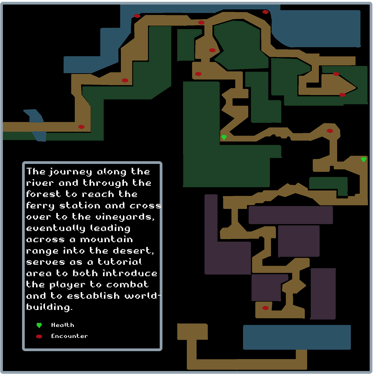
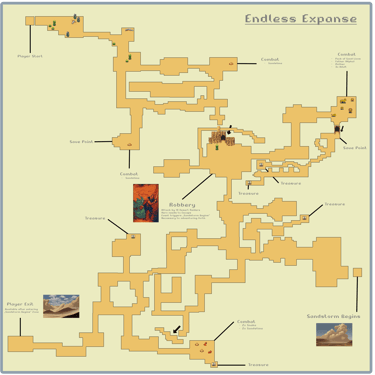
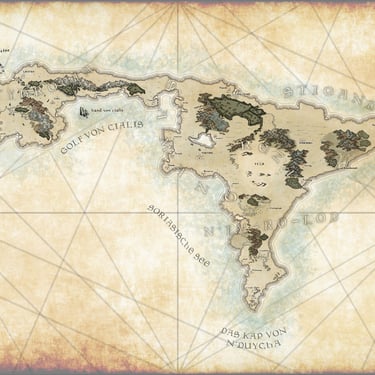
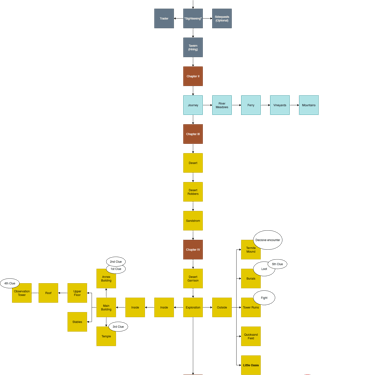
I began by designing the game's regions and world map, laying the foundation for coherent level transitions and narrative pacing before any implementation in Godot.
Learning Strategy
As a game desinger withouth Godot experience, I need a structured learning approach:
Project Management (Q7)
I created a detailed project plan in Trello:
Outcome
What I achieved
What I learned
Credits
Playable demo
Different types of enemy with AI
Complete action, quest, and progression mechanics
Boss fight with 3 attack patterns
Designer brain ≠ Developer brain
Code is an essential tool to prototype ideas, mechanics, and systems, but not the only one in a Desinger's toolcase.
Game design is player-centered
A designer’s vision must adapt to the needs and expectations of the players, not the other way around.
Planning is a skill
Time and resource management are critical. Without a structured project plan, even small games risk collapsing.
External feedback is invaluable
Solo development creates blind spots you can't see. I waited until Week 20 to test with external players. Testers revealed bugs which didn't appear on my machine. I should've tested early to prevent this from happening.
Scope defines survival
Ambition must be balanced with realistic planning. Cutting features and focusing on a polished core loop is often the difference between a finished prototype and an abandoned idea.
Tools






Fundamentals of Godot / GDScript:
Heartbeast's Gotot 4 Action RPG Tutorial Series -
https://www.youtube.com/watch?v=l_yTe50tHVg&list=PL9FzW-m48fn3H1URoqV6QorDpszCBIwt7
GDQuest YouTube Channel -
https://www.youtube.com/@Gdquest
Pixel Art Artists:
Seliel the Shaper -
https://seliel-the-shaper.itch.io/
finalbossblus -
https://finalbossblues.itch.io/
Barely_Games -
https://barely-games.itch.io/
P. S.
AI-assisted tools supported asset creation and helped debug specific code segments during development.